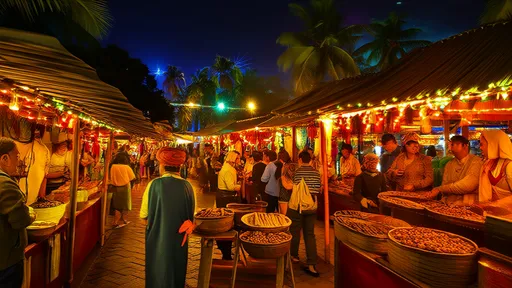
The humid night air carries the scent of lemongrass and sizzling meats as you step into the electric chaos of Xishuangbanna's Starlight Night Market. This sprawling bazaar under the tropical moonlight isn't just another tourist stop—it's a full sensory immersion into Dai culture, where the art of bargaining meets culinary adventures that'll make your taste buds dance. Locals know the real action begins when the sun dips below the horizon and the neon signs flicker to life.
Mastering the market's rhythm requires understanding its unspoken rules. The initial price quoted for that handwoven Dai skirt or silver bracelet isn't just inflated—it's part of an elaborate dance where both buyer and seller expect to meet somewhere in the middle. Seasoned visitors develop an ear for the particular lilt vendors use when they're ready to negotiate seriously. Watch for the subtle shift in body language when they stop dramatically clutching their chest at your counteroffer and start calculating on bamboo calculators—that's when you know you're getting somewhere.
The sticky rice vendors near the market's eastern edge do a brisk trade in purple-hued bundles steamed in banana leaves. These aren't your average side dish—each bite carries the subtle perfume of pandan and a texture that bounces back like memory foam. Nearby, a grandmother with tattooed wrists tends to a smoking grill where skewers of jinghong roast fish develop crackling skin. The secret's in the marinade—twenty-four hours in a paste of wild ginger, garlic scapes, and a dozen spices you'd struggle to name.
Bargaining here follows fluid mathematics rather than rigid formulas. That supposedly universal "start at 30% of asking price" advice will earn you eye rolls from vendors who've heard it from every travel blog. The real pros assess an item's craftsmanship before naming figures—the difference between machine-stitched elephant pants and ones with hand-embroidered peacocks changes the game entirely. Notice how the tea merchants pause to pour you a cup of pu'er during negotiations? That's not just hospitality—it's a strategic move to make you linger longer.
The sizzle of pineapple rice hitting hot cast iron creates an audible backdrop to market conversations. Cooks hollow out fresh pineapples, fry the rice with cashews and raisins inside the fruit shell until the edges caramelize, then crown it with flaked coconut. Nearby, a cluster of foodies crowds around a stall where a man in a "Beer Lao" tank top demonstrates the proper way to eat grilled river moss—the crisp seaweed-like sheets should be wrapped around sticky rice with a dab of chili-tamarind paste, all consumed in one messy, glorious bite.
Dessert alleys glow with the neon green of coconut jelly cubes stacked like emerald dominoes. The texture's somewhere between Turkish delight and fresh mozzarella, infused with just enough palm sugar to make it addictive without cloying. Older vendors remember when these treats came wrapped in newspaper rather than plastic containers, and if you catch them in a nostalgic mood, they might share stories about market life before smartphone flashlights replaced kerosene lamps.
The market's geography reveals its hierarchy. Prime real estate goes to the smoky barbecue pits near the main thoroughfare, where whole chickens rotate on spits above glowing charcoal. Second-tier vendors sell everything from hand-hammered silver to bootleg K-pop shirts in the middle aisles. The true gems hide along the periphery—look for the woman who only appears on rainy nights selling medicinal rice whiskey infused with centipedes, or the blind masseur who can identify muscle knots by touch alone.
Monks in saffron robes weave through the crowd holding alms bowls, not for food but to collect discarded bottle caps for an environmental project. Their presence signals it's time to wind down—the market never officially closes, but around midnight, the energy shifts as families pack up and food stalls start consolidating leftovers. That's when savvy eaters swoop in for late-night congee enriched with every remaining scrap of meat and herb from the day's prep stations, a culinary remix that tastes different every evening.
The Starlight Market doesn't just sell goods—it trades in experiences. That "handmade" bracelet might have come from a wholesaler in Guangzhou, but the twenty-minute negotiation filled with exaggerated gasps and eventual shared laughter creates a story worth more than the object itself. As dawn approaches and the last tea lights flicker out over the Mekong, what lingers isn't just the chili burn on your lips or the weight of souvenirs in your bag—it's the visceral memory of having navigated this temporary nocturnal kingdom on its own terms.

By /Jul 25, 2025

By /Jul 25, 2025

By /Jul 25, 2025

By /Aug 4, 2025

By /Jul 25, 2025

By /Jul 25, 2025

By /Jul 25, 2025

By /Jul 25, 2025

By /Jul 25, 2025
By /Jul 25, 2025

By /Aug 4, 2025

By /Jul 25, 2025

By /Aug 4, 2025

By /Jul 25, 2025

By /Aug 4, 2025

By /Aug 4, 2025

By /Jul 25, 2025
By /Aug 4, 2025

By /Aug 4, 2025
By /Jul 25, 2025
