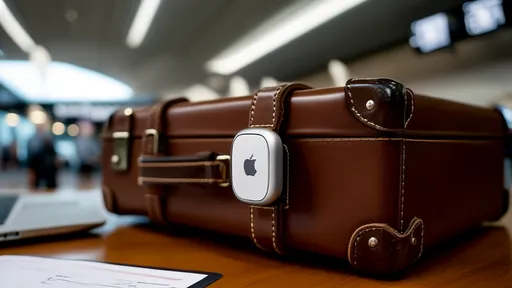
In an era where lost luggage has become an unfortunate norm for air travelers, Apple's AirTag has emerged as an unexpected hero. The tiny tracking device, designed primarily for finding misplaced keys or wallets, is now being repurposed by tech-savvy passengers to monitor checked baggage in real-time. This unconventional use has sparked both excitement and controversy across the aviation industry.
The Great AirTag Experiment
When software engineer Mark Reynolds first slipped an AirTag into his suitcase before a flight from San Francisco to London, he didn't expect to become part of a growing movement. His viral Twitter thread documenting his bag's unexpected detour through Paris—while he flew direct—ignited widespread curiosity about using consumer trackers for luggage surveillance. Aviation bloggers and frequent flyers soon began conducting their own tests, sharing detailed reports across social media platforms.
These amateur experiments revealed startling inconsistencies in airline baggage handling systems. One traveler's AirTag data showed their suitcase making repeated trips between the tarmac and baggage claim for three hours after their flight landed. Another documented their luggage being loaded onto the wrong aircraft twice during a single journey. The precision of these findings has forced airlines to reconsider their longstanding "black box" approach to baggage handling.
How Airlines Are Responding
Major carriers have adopted varying stances toward this passenger-initiated tracking. Some European airlines have begun incorporating AirTag compatibility into their mobile apps, while certain Asian carriers reportedly discourage the practice due to battery safety concerns. The International Air Transport Association (IATA) maintains that lithium coin cells in AirTags fall below dangerous thresholds, but the debate continues to cause confusion at check-in counters worldwide.
Behind the scenes, baggage handling contractors are feeling the heat from this new transparency. One Zurich Airport worker confessed that seeing passengers receive real-time alerts about baggage delays has created pressure to explain routine handling procedures that were previously invisible to customers. This unexpected accountability is driving some airports to accelerate planned investments in professional tracking systems that rival the AirTag's capabilities.
Technical Limitations and Surprising Advantages
While AirTags provide unprecedented visibility, their reliance on Apple's Find My network creates coverage gaps in certain airport areas. Underground baggage sorting facilities often appear as "gray zones" on tracking maps, leaving passengers to wonder about their luggage's whereabouts during critical transfer periods. However, the devices excel at confirming when bags make it onto the correct aircraft—a feature that has saved numerous travelers from boarding flights without their belongings.
The psychological impact on travelers has been profound. Frequent business flyer Elena Petrov describes checking her AirTag notifications as "therapy" during tight connections. "Seeing that little dot moving toward my next gate gives me permission to relax," she explains. This emotional benefit has become a selling point for travel agencies targeting anxious flyers, with some now including AirTags as standard in their premium packages.
The Legal and Ethical Gray Area
As AirTag tracking becomes mainstream, complex questions are emerging about data ownership and privacy. When a passenger's tracker reveals that an airline misrouted their bag, should that data be admissible in compensation claims? Can airports legally disable tracking in secure areas? These unanswered questions have aviation lawyers preparing for what some predict will become a new frontier in travel litigation.
Privacy advocates have raised concerns about potential misuse, imagining scenarios where stalkers might exploit the technology to track people through their luggage. Apple's safety features—which alert users to unknown AirTags traveling with them—provide some protection, but the discussion has prompted calls for clearer regulations around location-tracking devices in transit environments.
What the Future Holds
The AirTag phenomenon has accelerated existing trends toward baggage transparency. Several airlines have fast-tracked plans to implement RFID tracking at all touchpoints, while startups are developing specialized luggage tags with enhanced airport compatibility. The humble AirTag has demonstrated that passengers crave visibility, and the industry appears finally ready to listen.
For now, the consensus among travel experts is clear: slipping an AirTag into your checked luggage provides peace of mind that no airline disclaimer can match. As one frequent flyer put it while watching her suitcase's progress across an airport map: "This isn't just about finding lost bags anymore. It's about never feeling lost yourself." The revolution in baggage tracking has begun—not in airline boardrooms, but in the pockets of ordinary passengers.

By /Jul 25, 2025

By /Jul 25, 2025

By /Jul 25, 2025

By /Aug 4, 2025

By /Jul 25, 2025

By /Jul 25, 2025

By /Jul 25, 2025
By /Jul 25, 2025

By /Jul 25, 2025

By /Jul 25, 2025

By /Aug 4, 2025

By /Jul 25, 2025

By /Aug 4, 2025

By /Jul 25, 2025

By /Aug 4, 2025

By /Aug 4, 2025

By /Jul 25, 2025

By /Aug 4, 2025

By /Aug 4, 2025

By /Jul 25, 2025
