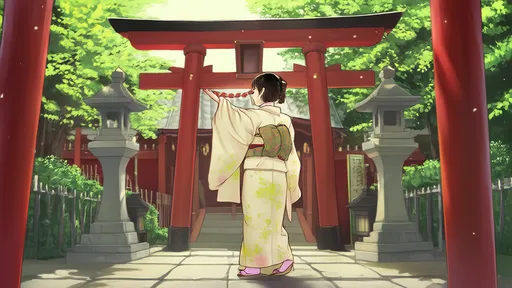
Visiting a Shinto shrine in Japan is a deeply spiritual experience that offers a glimpse into the country’s rich cultural heritage. One of the most recognizable rituals is the act of worship, known as “ni-rei ni-hakushu ichi-rei”—two bows, two claps, and one bow. While the sequence may seem simple at first glance, each movement carries profound meaning and reflects the reverence embedded in Shinto practices.
Before approaching the main hall (honden), visitors often purify themselves at a water pavilion called a temizuya. Using a ladle, they rinse their left hand, then their right, and finally their mouth, symbolizing the cleansing of impurities. This preparatory step is essential, as purity is a cornerstone of Shinto belief. Only after this purification does one proceed to the worship ritual itself.
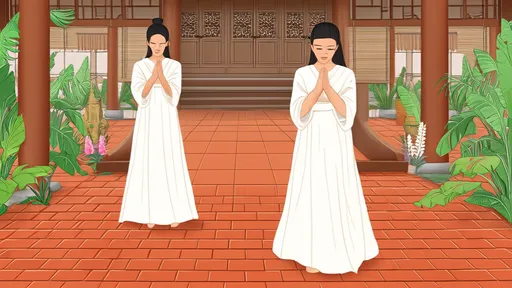
The first bow, performed at a slight angle, is a gesture of respect to the kami (the spirits or deities enshrined). The depth of the bow matters—it should be deliberate but not exaggerated, reflecting sincerity rather than performative piety. This initial bow serves as a greeting, acknowledging the presence of the divine before making an offering or prayer.
Following the bow, the worshipper claps their hands twice. The sharp sound of the claps is believed to attract the attention of the kami, as well as ward off evil spirits. The clapping also symbolizes the unity of the human and divine realms, a momentary connection between the physical and spiritual worlds. The hands are held together in prayer position after the claps, often accompanied by a silent prayer or wish.
The final bow, deeper than the first, signifies gratitude and humility. It is a way of expressing thanks for the kami’s attention and blessings. This concluding gesture completes the ritual, leaving the worshipper with a sense of closure and spiritual fulfillment. The entire sequence is fluid, with no pause between movements, creating a meditative rhythm that enhances the experience.
While the “two bows, two claps, one bow” ritual is standardized, regional variations exist. Some shrines may incorporate additional steps, such as ringing a bell before clapping or offering a small monetary donation (saisen) at the offering box. These nuances reflect the diversity of Shinto practices across Japan, yet the core essence of reverence remains unchanged.
For many Japanese people, this ritual is more than a tradition—it is a way to cultivate mindfulness and connect with something greater than oneself. Tourists and foreign visitors are welcome to participate, provided they approach the act with sincerity and respect. Understanding the symbolism behind each movement enriches the experience, transforming a simple gesture into a meaningful cultural exchange.
Shinto shrines, with their serene atmosphere and timeless rituals, offer a respite from the fast-paced modern world. Whether one is seeking blessings, expressing gratitude, or simply observing, the act of worship serves as a bridge between the past and present, the human and the divine. The elegance of the ni-rei ni-hakushu ichi-rei lies in its simplicity, yet its significance resonates deeply with those who partake in it.
By /Jul 25, 2025

By /Jul 25, 2025

By /Jul 25, 2025

By /Aug 4, 2025
By /Jul 25, 2025

By /Jul 25, 2025

By /Jul 25, 2025

By /Jul 25, 2025

By /Jul 25, 2025

By /Jul 25, 2025
By /Aug 4, 2025
By /Jul 25, 2025

By /Aug 4, 2025

By /Jul 25, 2025

By /Aug 4, 2025

By /Aug 4, 2025
By /Jul 25, 2025
By /Aug 4, 2025
By /Aug 4, 2025
By /Jul 25, 2025
