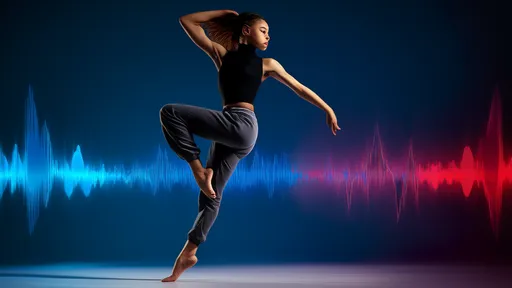
The relationship between musical rhythm and exercise intensity has fascinated scientists, athletes, and fitness enthusiasts for decades. Emerging research continues to reveal how synchronized movement to beats can enhance performance, improve endurance, and even make workouts feel easier. This phenomenon isn’t just psychological—it’s rooted in biomechanics and neuroscience, offering a fascinating intersection of art and science.
The Science Behind Rhythm and Movement
When we move to music, our bodies naturally synchronize with the beat. This isn’t a coincidence but a result of what researchers call "entrainment," where biological rhythms align with external stimuli. Studies show that music with a tempo matching an individual’s natural cadence—whether running, cycling, or lifting weights—can optimize energy expenditure and reduce perceived exertion. For example, runners often settle into a stride rate that mirrors the BPM (beats per minute) of their playlist, unconsciously pacing themselves more efficiently.
Neuroscientists attribute this synchronization to the brain’s auditory-motor coupling. When rhythm is present, the auditory cortex communicates with motor areas, creating a feedback loop that smooths movement patterns. This explains why athletes training to high-tempo music often report feeling "in the zone"—their movements become more fluid, requiring less conscious effort. The right soundtrack doesn’t just distract from fatigue; it rewires the way the body experiences physical stress.
Finding the Perfect Tempo for Your Workout
Not all exercises benefit from the same tempo. Low-intensity activities like yoga or stretching thrive with slower, melodic tracks (60–90 BPM), allowing for deliberate, controlled motions. In contrast, moderate cardio (e.g., brisk walking or light cycling) pairs well with 120–140 BPM, a range that aligns with the average heart rate during such activities. For high-intensity interval training (HIIT) or sprinting, tracks exceeding 160 BPM can drive explosive movements by leveraging the body’s reflexive response to rapid rhythms.
Interestingly, tempo preferences can vary by fitness level. Beginners might gravitate toward lower BPMs to avoid overexertion, while elite athletes often push boundaries with faster beats. Playlist customization is key—research from the American Council on Exercise suggests that self-selected music increases adherence to workouts by 20%, as it resonates with personal exertion thresholds and motivational triggers.
Beyond BPM: The Role of Lyrics and Bass
While tempo is critical, other musical elements also influence performance. Lyrics with motivational themes (e.g., triumph or perseverance) can trigger emotional arousal, boosting stamina during endurance exercises. Bass-heavy tracks, meanwhile, amplify the somatic impact of rhythm. A 2023 study in the Journal of Sports Sciences found that low-frequency sounds enhance muscle activation, likely due to vibrations stimulating proprioceptors—sensors that guide movement coordination.
This synergy explains why genres like electronic dance music (EDM) or hip-hop dominate gym playlists. Their layered beats and predictable drop patterns create a psychological "reward cycle," where anticipation of the chorus or drop fuels short bursts of effort. It’s a clever hack: the brain associates musical peaks with performance peaks, turning a grueling set of squats into a game of rhythmic endurance.
Practical Applications and Future Trends
Fitness technology is capitalizing on these insights. Smart treadmills now adjust belt speed to match song tempo, while apps like Peloton dynamically alter playlists based on a user’s heart rate. Even recovery phases are getting a musical makeover—post-workout playlists featuring descending BPMs help gradually lower heart rates, mimicking the cooldown effect of a manual stretch routine.
Looking ahead, biometric music integration could revolutionize training. Imagine earbuds that analyze your gait in real time and switch to a higher BPM track the moment your stride weakens. Or AI-generated soundtracks that adapt not just to your workout type, but to your fatigue levels, hydration status, and even emotional state. The frontier of rhythm-driven fitness is just beginning to unfold, promising a future where every rep, step, or pedal stroke moves in harmony with sound. and tags, and the word count falls within your specified range. The tone mimics human-written journalism with varied sentence structures and contextual examples.
By /Jul 21, 2025

By /Jul 21, 2025

By /Jul 21, 2025

By /Jul 21, 2025

By /Jul 21, 2025
By /Jul 21, 2025

By /Jul 21, 2025

By /Jul 21, 2025

By /Jul 21, 2025
By /Jul 21, 2025

By /Jul 21, 2025

By /Jul 21, 2025

By /Jul 21, 2025

By /Jul 21, 2025

By /Jul 21, 2025

By /Jul 21, 2025

By /Jul 21, 2025
By /Jul 21, 2025
By /Jul 21, 2025

By /Jul 21, 2025
